How Much Does It Cost to Build a House in North Idaho? 2026 Guide
How Much Does It Cost to Build a House in North Idaho? 2026 Guide
If you're thinking about buying land and building a home in North Idaho, there's usually one question that comes first:
How much is this actually going to cost?
And inevitably, someone answers with a price per square foot.
That's where I think buyers need to be careful.
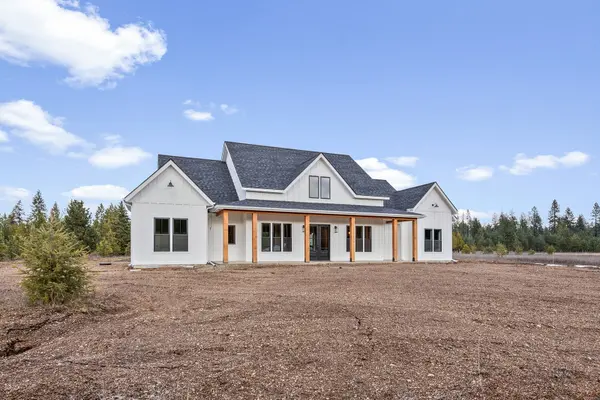
Because building a 2,500-square-foot house on a flat lot with utilities nearby is very different from building that exact same house on five wooded acres requiring a 600-foot driveway, a well, septic, power extension, tree clearing and rock excavation.
The floor plan didn't change.
The project absolutely did.
So instead of starting with “What's the price per square foot?”, here's how I recommend looking at the real cost of building a home in North Idaho.
So, What Does It Cost Per Square Foot to Build in North Idaho?
For a true custom home, a realistic starting conversation in 2026 is often around $290–$350+ per square foot for the house itself, with higher-end custom and luxury homes reaching $400, $500 or even $600+ per square foot depending on the builder, architecture and finishes.
Those aren't quotes.
They're planning ranges.
And they're deliberately broad because local builders themselves publish dramatically different ranges. Current North Idaho builders cite everything from roughly $290+ per square foot for mid-range custom construction to $350–$500 for custom homes around Coeur d'Alene, while Lake Coeur d'Alene luxury construction can reach $600+ per square foot. Bespoke Design + Build
But there's an even more important detail:
That number may not include everything required to turn your land into a finished property.
And that's where people get into trouble.
A $750,000 House Isn't Necessarily a $750,000 Project
Let's say you're considering a 2,500-square-foot custom home.
At $300 per square foot, that's:
2,500 SF × $300 = $750,000
It's tempting to think:
"Great. I need $750,000 plus the land."
Not necessarily.
Depending on how your builder calculates their price, you may still have costs associated with:
- Land
- Surveying
- Engineering
- Architectural/design work
- Permits
- Excavation
- Tree clearing
- Driveway
- Well
- Septic
- Power
- Utility trenching
- Propane
- Grading
- Drainage
- Landscaping
- Fencing
- Shop or detached garage
- Construction financing
- Contingencies
That's why I want to evaluate the land and the build together before one of my clients falls in love with a parcel.
A cheap piece of land isn't always a cheap place to build.
1. The Land Comes First
Your lot can completely change your construction budget.
Imagine two five-acre parcels listed at similar prices.
Property A is relatively flat, has good road access, power near the building site and soils that work well for septic.
Property B has beautiful mountain views—but the homesite is up a slope, heavily wooded, power is farther away and excavation requires dealing with rock.
Those aren't financially equivalent lots.
This is one reason I don't recommend choosing land based solely on acreage and purchase price.
Before you buy, we need to understand what it's going to take to actually put your house there.
2. Excavation and Site Preparation
This is one of the biggest wild cards when building in North Idaho.
Your site may require:
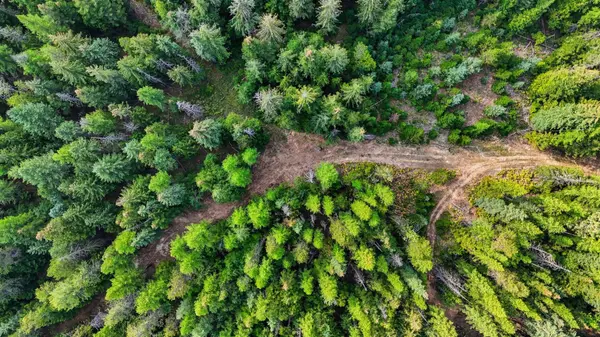
Tree clearing.
Stump removal.
Rock excavation.
Grading.
Cut and fill.
Drainage work.
Retaining walls.
Foundation excavation.
A long driveway.
Or some combination of all of them.
And North Idaho terrain can change dramatically within a relatively short distance.
A gorgeous sloped property overlooking the lake may require considerably more site work than a flat parcel outside Rathdrum.
That's why a builder walking the property before you purchase it can be incredibly valuable.
3. Your Driveway Can Become a Real Construction Expense
Driveways aren't very exciting until you price one.
On acreage, your house might sit hundreds of feet from the road.
Now you're potentially paying for clearing, excavation, base material, gravel or paving, drainage and culverts.
And I also want to think beyond construction.
How are you plowing it?
Can emergency vehicles access it?
Is it too steep?
Where does snow get pushed?
What happens during spring runoff?
A dramatic winding driveway through the trees looks incredible.
Just make sure you understand what it costs to build and maintain.
4. Well Costs Can Vary Dramatically
If you're building outside an area served by public or community water, you may need a private well.
There isn't a reliable flat price for that either.
Depth matters.
Geology matters.
Casing matters.
Pump equipment matters.
And what happened on the neighboring parcel doesn't guarantee you'll have the same experience.
One Northern Idaho drilling company currently gives a broad planning range of approximately $20,000–$60,000 for residential wells depending largely on depth and geological conditions. Trident Drilling LLC
That's exactly why I recommend getting an estimate rather than putting an arbitrary $15,000 line item into your build budget.
Idaho also requires a drilling permit before a well is drilled, and wells must be constructed by an Idaho-licensed well driller. IDWR maintains well records that can help you research nearby well depths, water levels and reported flow rates. Idaho Department of Water Resources
If I'm evaluating vacant land with a buyer, nearby well logs are one of the things I want to investigate.
5. Then There's Septic
No public sewer?
Now we need to determine whether the property can support the septic system your home requires.
That may involve site evaluation, soil conditions, system design and permitting.
And don't just ask:
"Can I put septic here?"
I also want to know:
Where does it need to go?
Because your septic system and reserve area can affect where you place the house, shop, driveway and future improvements.
Panhandle Health District oversees land-development and septic-related permitting across Kootenai, Bonner, Boundary, Benewah and Shoshone counties. Panhandle Health District
This is something I'd investigate during land due diligence—not after closing.
6. Power Can Be Another Surprise
There's a big difference between:
"There's power at the road."
and
"Power is at my building site."
If your house is hundreds of feet into the property, you're still getting power from one location to the other.
That can involve trenching, conduit, transformers or other infrastructure depending on the property and utility provider.
If you're considering vacant acreage, identify the utility provider and get actual information about bringing service to your intended building site.
Don't assume.
7. Public or Community Utilities Aren't Automatically Free Either
Here's another one buyers sometimes miss.
Maybe the property doesn't need a well or septic because public or community utilities are available.
Great.
What are the connection fees?
Availability and connection are two different things.
Ask:
Is water at the property?
Is sewer at the property?
Have connection fees already been paid?
Are there meter fees?
Capacity fees?
Extension costs?
Other utility requirements?
I've seen buyers look at a parcel and think utilities are handled because they're "available."
I want to know what available actually means.
8. The Shape of Your House Matters
Two 2,500-square-foot homes can have completely different construction costs.
A relatively simple rectangular two-story home can be more efficient to build than a sprawling single-level home with multiple rooflines, bump-outs, corners and foundation changes.
Why?
More exterior wall.
More foundation.
More roof.
More framing complexity.
More labor.
This is why I tell buyers not to get too attached to price-per-square-foot calculations.
Complexity costs money.
Sometimes simplifying the architecture allows you to put more of your budget into the finishes you actually notice every day.
9. Single-Level Homes Can Cost More Per Square Foot
This surprises some buyers.
Take two homes with the same finished square footage.
One is a 2,500-square-foot rancher.
The other is approximately 1,250 square feet downstairs and 1,250 upstairs.
The rancher generally requires substantially more roof and foundation to enclose the same amount of living space.
That doesn't mean you shouldn't build a rancher.
I love a well-designed single-level home.
It just means floor-plan efficiency matters when you're working backward from a budget.
10. Your Finishes Can Move the Number Fast
This is where custom construction gets fun.
And dangerous to the budget.
Quartz versus quartzite.
Standard appliance package versus Thermador.
Stock cabinetry versus custom inset cabinetry.
LVP versus engineered hardwood.
Fiberglass shower versus mud-set tile.
Standard windows versus oversized window packages.
Painted fireplace versus floor-to-ceiling stone.
Eight-foot doors.
Beams.
Built-ins.
Lighting.
Plumbing fixtures.
None of those decisions necessarily changes the square footage.
They absolutely change the price.
This is why two homes that are both described as “custom” can have completely different construction budgets.
11. Don't Forget the Garage
When someone tells you a builder charges "$X per square foot," here's one of my favorite follow-up questions:
Which square feet?
Is that conditioned living space?
Does it include the garage?
Covered patios?
Decks?
Porches?
Bonus space?
A 2,500-square-foot house with a three-car garage and 800 square feet of covered outdoor living is a substantially different project from a simple 2,500-square-foot house with a two-car garage.
Before comparing builder pricing, make sure everyone is calculating the number the same way.
Otherwise you're comparing apples to oranges.
12. And Then You Decide You Want a Shop...
Welcome to North Idaho.
This happens a lot.
Maybe it's a 30×40.
Maybe it's a 40×60.
Maybe you want RV doors, heat, insulation, a bathroom, floor drains or finished space.
A shop can be an incredible addition to an acreage property.
It can also become its own mini construction project.
So if a shop is part of the dream, tell your builder and Realtor before you buy the land.
We need to make sure there's actually somewhere to put it.
That means looking at setbacks, septic location, topography, driveway access, zoning and the orientation of the house.
13. Permits Need Their Own Budget
Building permits aren't just a box to check.
They're part of your budget and timeline.
For example, Kootenai County's permitting system currently assesses a $141 non-refundable application fee at submission, with additional permit-related costs depending on the project. iMS
Requirements and fees vary based on jurisdiction and project.
If you're building inside city limits, the process can also differ from building in unincorporated county land.
So identify the jurisdiction early.
14. Build in a Contingency
If you're building on raw land, I don't like budgets that use every available dollar before excavation even starts.
Things happen.
You encounter unexpected rock.
The well needs to go deeper.
Site work costs more.
You upgrade the kitchen.
You decide you absolutely cannot live without the giant sliding door you saw on Pinterest.
Whatever it is, having contingency money gives you room to make decisions without derailing the entire project.
Your builder and lender can help determine an appropriate contingency for your specific build.
What Could a North Idaho Build Actually Look Like?
Here's a hypothetical example.
Let's say you want:
2,500 SF custom home
3-car garage
5-acre parcel
Private well
Private septic
Shop eventually
If the home itself were approximately $300/SF, you'd begin around:
$750,000 for the house
Then you'd separately evaluate:
Land: depends entirely on location
Site work: property specific
Well: potentially tens of thousands
Septic: property/system specific
Driveway: property specific
Power/utilities: property specific
Permits/design/engineering: project specific
Landscaping: depends on scope
Shop: separate budget
Suddenly you can see why asking:
"Can I build a 2,500-square-foot house for $750,000?"
isn't quite the right question.
I'd rather ask:
"What is my total project budget, including land, and what can we realistically build within it?"
That's the conversation I want to have before you buy anything.
Should You Buy the Land Before Talking to a Builder?
Ideally?
No.
You can absolutely start looking at land first.
But before removing your due-diligence protections and fully committing to a parcel, I'd like your builder—or at minimum the appropriate site professionals—to have an opportunity to evaluate it.
Because once you own the land, you're building around whatever limitations came with it.
Before you buy, we still have choices.
That's a powerful difference.
What Should You Do First?
If someone came to me tomorrow and said:
"Amanda, we have $1.2 million and want to buy land and build somewhere around Coeur d'Alene."
I'm not starting by sending them random $300,000 lots.
First, I want to know:
How large of a house?
What finish level?
Garage?
Shop?
Acreage?
Trees or open land?
Mountain or lake views?
How close to town?
Public utilities or okay with well and septic?
Single level or two story?
Then we work backward.
Maybe the land budget is $200,000.
Maybe it's $400,000.
Maybe the house they're describing means we need to reconsider the total budget.
I'd rather figure that out before you own a beautiful piece of land that doesn't work with the house you want to build.
Where Are People Building Around Coeur d'Alene?
Depending on the type of property you're looking for, I'd consider areas throughout:
Coeur d'Alene
Hayden
Post Falls
Rathdrum
Athol
Spirit Lake
Harrison
Sandpoint and Bonner County
But I wouldn't choose the area solely based on where land appears cheapest.
Commute.
Utilities.
Topography.
Road access.
Well depths.
Snow.
Internet.
Building restrictions.
And resale all matter too.
Buying Land and Building in North Idaho
Building can be one of the best ways to get exactly what you want in North Idaho.
But I think the biggest mistake buyers make is treating this as two separate transactions:
First I'll buy the land.
Then I'll figure out the house.
I prefer the opposite approach.
Land + house + site development = one project.
Before we buy the dirt, let's understand the entire picture.
Because the goal isn't just finding five beautiful acres.
It's finding five beautiful acres where you can actually build the home you have in mind—within a budget you're comfortable with.
Thinking About Building in North Idaho?
If you're considering buying land and building around Coeur d'Alene, Hayden, Post Falls, Rathdrum, Athol, Sandpoint or the surrounding areas, start with my Buying Acreage in North Idaho: 12 Things to Know Before You Buy guide.
You can also download my North Idaho Acreage Buyer's Guide for a deeper look at wells, septic, utilities, water rights and evaluating rural property.
And if you're still trying to decide which North Idaho community fits your lifestyle, start with my Complete Guide to Moving to Coeur d'Alene, Idaho.
If you're ready to start looking for land, reach out before you buy it.
We'll start with the house you want to build—and work backward to the land that can actually support it.
Helping you find more than home.
Categories
Recent Posts